By clicking “Accept all”, you agree to storing cookies on your device to enhance site navigation, analyze site usage, and assist in our marketing efforts. More information can be found on "Manage cookies".
When you visit any website, it may store or retrieve information on your browser, mostly in the form of cookies. These “cookies” of information might be about you, your preferences, or your device, and they’re mostly used to make the site work as you expect it to. Cookies don’t usually directly identify you, but they can give you a more personalized web experience. Because we respect your right to privacy, you can choose not to allow some types of cookies. Click on the category headings to read more or change your default settings. (Note: Blocking some types of cookies may impact your experience on our site, as well as the services we can offer you.)
These cookies are necessary for our website to function and can’t be switched off in our systems. They’re set for you behind the scenes when you do things such as log in, fill out forms, make a request for services, or set your privacy preferences. You can set your browser to block or alert you about these cookies, but some parts of our site won’t work without them.
+Functional Cookies
These cookies enable our website to work smoothly and in a manner personalized to you. They may be set by us or by third-party providers whose services we’ve added to our pages. For example; downloading a customer service form using PDF. If these cookies are blocked, then some or all of these services may not function.
+Performance Cookies
These cookies allow us to count how many times people visit our website, and how they get here, so we can measure and improve its performance. They show us which pages are the most (and least) popular, and how visitors move around on the site when they’re here. If you don’t allow performance cookies, we have less information about how to improve our sites that will be useful to you.
+Marketing Cookies
These cookies may be set through our site by our advertising partners. They may be used by those companies to build a profile of your interests and show you relevant advertisements on other sites. If these cookies are blocked, you will experience less targeted advertising.
How Pond Modernizes Medical Device Manufacturing Facilities Without Stopping Production
In medical device manufacturing, downtime carries measurable consequences. Pauses in production can tighten supply chains, impact product availability, and introduce compliance risk.
At the same time, aging infrastructure, evolving emissions standards, and rising capacity demands make facility modernization inevitable. The question facing manufacturers is pressing: how can critical systems be upgraded without stopping production?
For one long-term healthcare manufacturing client, Pond led a six-year transformation of an active sterilization and manufacturing campus. More than twenty projects were executed in coordinated succession, expanding capacity, upgrading infrastructure, and improving cleanroom environments.
The program resulted in a modernized facility positioned for future growth, achieved through disciplined sequencing and program-level coordination.
Modernization Structured as a Coordinated Program
Facility upgrades often begin as one-off projects. A lab renovation, a new emissions control system, or a utility replacement. But over time, this fragmented approach can introduce system conflicts, redundant work, and operational strain.
Pond structured this initiative as a long-range modernization program rather than a collection of disjointed projects. Over six years, improvements were sequenced to strengthen infrastructure reliability, increase sterilization throughput, and support evolving production demands.
Critical sterilization and manufacturing systems remained online during construction, while temporary systems were deployed where required. Strategic procurement accounted for long-lead equipment, and construction activities were aligned with production priorities.
Upgrading Sterilization Infrastructure While Maintaining Throughput
Before design work started, the team focused on identifying the client’s priorities. Leadership made it clear: sterilization throughput could not fluctuate, emissions compliance could not be compromised, and future capacity would be required. Any modernization effort would need to respect those realities from day one.
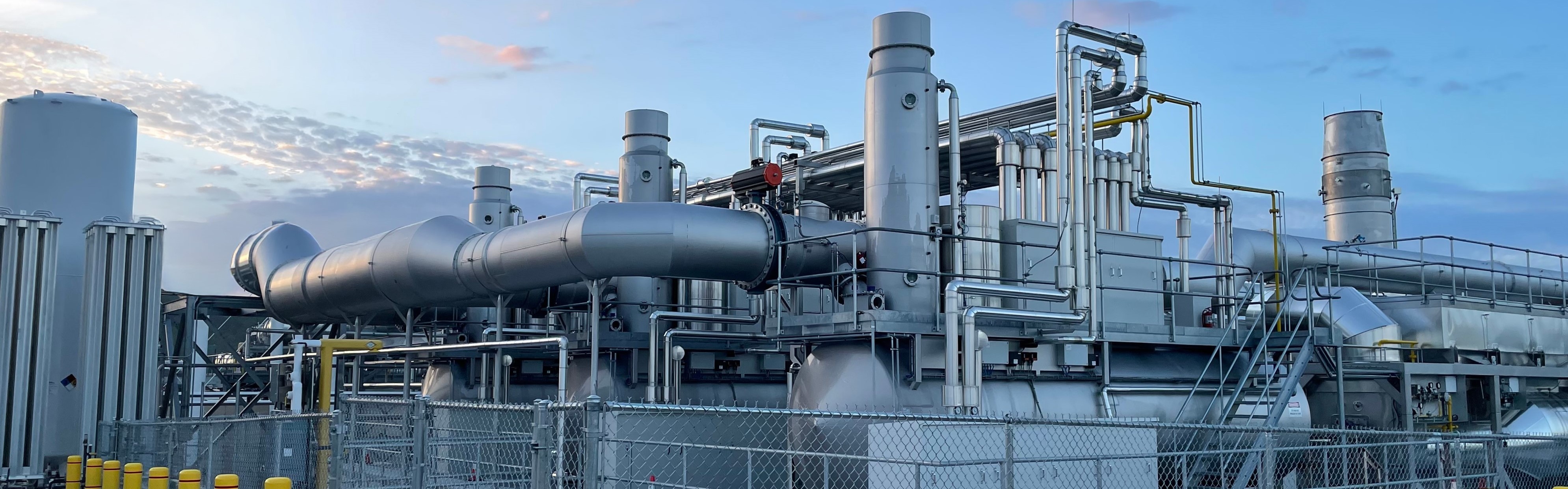
With those priorities in focus, Pond led the replacement and expansion of catalytic oxidizers supporting sterilization operations. Seven new high-efficiency systems were introduced, each selected and sized to accommodate projected production growth rather than just current demand.
Because uninterrupted sterilization cycles were critical to the client’s business model, sequencing became a central planning driver. New systems were brought online before decommissioning legacy units. During key transition points, temporary abatement systems were deployed and integrated so crews could shift between old and new infrastructure without disrupting sterilization bandwidth.
To reduce uncertainty prior to installation, advanced modeling, including computational fluid dynamics (CFD), was conducted to evaluate airflow performance and emissions capture strategies. This analysis informed equipment placement, duct routing, and tie-in strategies to minimize field adjustments during commissioning.
By aligning technical decisions with the client’s operational and growth objectives, the upgraded sterilization platform now supports projected production growth.
Cleanroom Design Within an Active Facility
Expanding controlled environments inside a live manufacturing plant requires precise coordination. Airflow control, pressure differentials, material segregation, and contamination prevention must be achieved without disturbing adjacent production zones.
Pond delivered several high-performance laboratory and manufacturing environments within the campus, including:
A new tubing manufacturing cleanroom
A chemical laboratory equipped with specialized fume hoods and emissions control systems
Dedicated preparation and testing rooms operating under controlled pressure conditions
Integrated high-purity water, compressed gas, and specialty utility systems
Air systems were reengineered to maintain required pressure relationships and targeted air change rates. Epoxy flooring, aluminum wall panels, and hygienic ceiling systems were selected to support medical-grade manufacturing requirements consistent with ISO cleanroom standards.
Several existing operations shifted into newly built spaces within the facility. Early site investigations mapped available utility capacity, evaluated opportunities for infrastructure reuse, and assessed mezzanine relocation feasibility. That groundwork allowed teams to transition functions in deliberate stages, reducing disruption during each move.
Throughout the process, architectural, structural, mechanical, and controls teams worked in close alignment with construction management on the floor. Decisions were made in real time as spaces turned over and new cleanroom environments came online.
Addressing Power, Fuel, and Utilities
Power distribution, fuel storage, containment systems, and plant utilities are tightly interwoven into day-to-day operations.
Over the course of the program, aging fuel storage infrastructure was replaced with two 15,000-gallon double-walled diesel tanks incorporating tertiary containment. Spill containment zones and underground piping were reworked to align with current environmental expectations.
The upgraded fuel systems were connected to boilers and backup generators, reinforcing the facility’s operational backbone. Emergency power improvements followed, with new generators and paralleling switchgear introduced in carefully timed installations that accommodated the facility’s 24/7 production schedule.
Together, these upgrades resolved legacy vulnerabilities and strengthened the campus’s capacity to support expanded throughput.
Managing Risk in Active Manufacturing Environments
Modernization within a medical device manufacturing facility introduces layered risks:
Supply chain constraints for specialized equipment
Complex tie-ins to active systems
Worker safety during construction activities
Schedule compression driven by production demands
As the program advanced, long-lead equipment was identified early and procurement activities moved forward ahead of installation milestones. Where system transitions required flexibility, temporary infrastructure was brought online.
Onsite engineering presence and dedicated program leadership remained consistent throughout the multi-year effort. That continuity allowed teams to respond quickly as field conditions shifted, minimizing fragmentation between design intent and construction realities.
Pond’s Approach to Facility Modernization
Facility modernization in regulated manufacturing environments demands alignment between engineering, construction, and live operations.
At program completion, the facility operated with:
Seven high-efficiency catalytic oxidizers
Expanded fuel storage and upgraded backup power systems
Validated cleanrooms and laboratory environments
Physically separated and optimized operational zones
Enhanced airflow management and emissions control systems
Pond’s integrated EPCM delivery model—spanning architecture, structural, mechanical, electrical and process engineering, instrumentation and controls, fire protection, cost estimating, construction management, and commissioning—creates alignment throughout the project lifecycle.
The strategy centers around building modernization plans that support client operations and production objectives.
For manufacturers facing aging infrastructure, capacity ceilings, or cleanroom expansions, facility modernization can progress alongside active production when supported by disciplined planning and experienced program leadership.
Learn how Pond supports complex facility modernization and cleanroom design for advanced manufacturing environments. Explore our Life Sciences and Industrial capabilities to see how we help clients prepare for future demands while maintaining today’s operations.