By clicking “Accept all”, you agree to storing cookies on your device to enhance site navigation, analyze site usage, and assist in our marketing efforts. More information can be found on "Manage cookies".
When you visit any website, it may store or retrieve information on your browser, mostly in the form of cookies. These “cookies” of information might be about you, your preferences, or your device, and they’re mostly used to make the site work as you expect it to. Cookies don’t usually directly identify you, but they can give you a more personalized web experience. Because we respect your right to privacy, you can choose not to allow some types of cookies. Click on the category headings to read more or change your default settings. (Note: Blocking some types of cookies may impact your experience on our site, as well as the services we can offer you.)
These cookies are necessary for our website to function and can’t be switched off in our systems. They’re set for you behind the scenes when you do things such as log in, fill out forms, make a request for services, or set your privacy preferences. You can set your browser to block or alert you about these cookies, but some parts of our site won’t work without them.
+Functional Cookies
These cookies enable our website to work smoothly and in a manner personalized to you. They may be set by us or by third-party providers whose services we’ve added to our pages. For example; downloading a customer service form using PDF. If these cookies are blocked, then some or all of these services may not function.
+Performance Cookies
These cookies allow us to count how many times people visit our website, and how they get here, so we can measure and improve its performance. They show us which pages are the most (and least) popular, and how visitors move around on the site when they’re here. If you don’t allow performance cookies, we have less information about how to improve our sites that will be useful to you.
+Marketing Cookies
These cookies may be set through our site by our advertising partners. They may be used by those companies to build a profile of your interests and show you relevant advertisements on other sites. If these cookies are blocked, you will experience less targeted advertising.
HDD Done Right: Reducing Risk in Complex Siting Environments
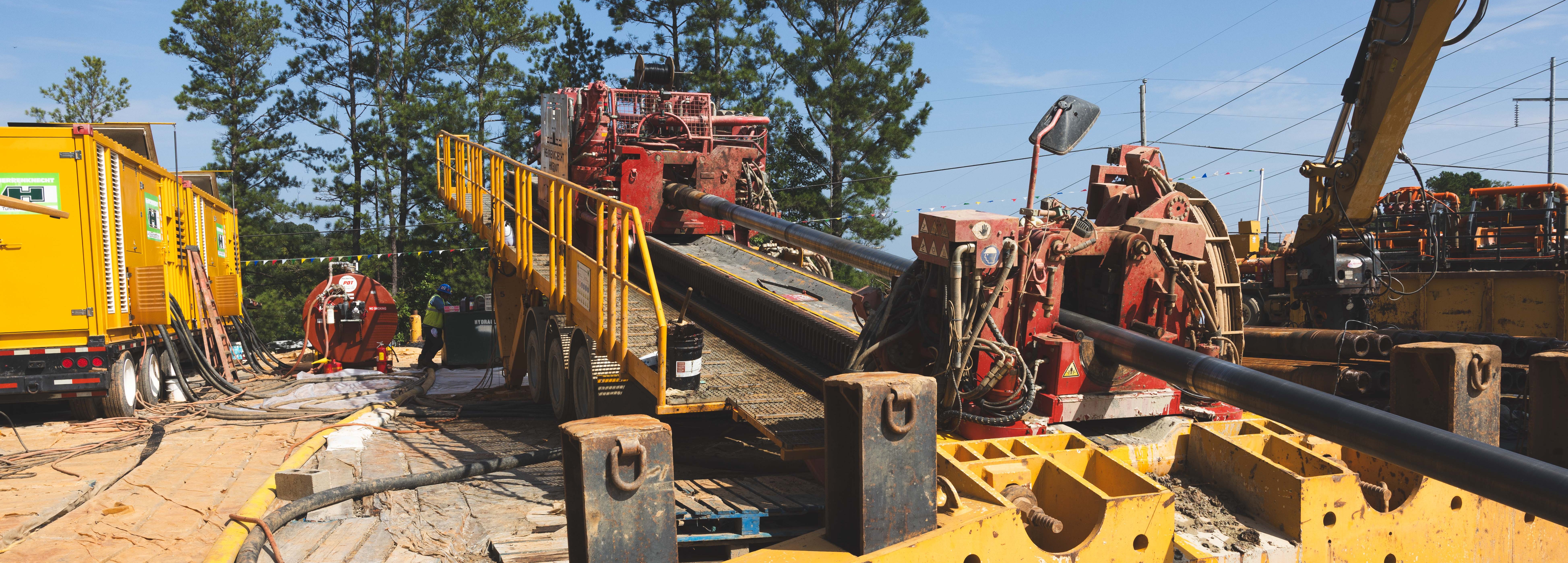
Horizontal Directional Drilling (HDD) has become an invaluable engineering method in settings where surface disruption must be minimized. When interstates, highways and busy roads can’t close and waterways can’t be disturbed, HDD frequently rises to the top of the options list. And while it reduces surface disruption, it also introduces its own set of technical, environmental, and safety risks below ground.
In complex siting environments, the difference between success and failure is rarely the drill itself. Instead, outcomes are shaped much earlier. It’s the upfront engineering, geotechnical understanding, and risk-informed decision-making that ultimately determine whether HDD is done right.
At Pond, HDD projects are approached long before a drill head ever enters the ground. Our teams bring together geotechnical insight, subsurface engineering, and environmental planning to help owners and contractors make informed decisions early.
What is HDD?
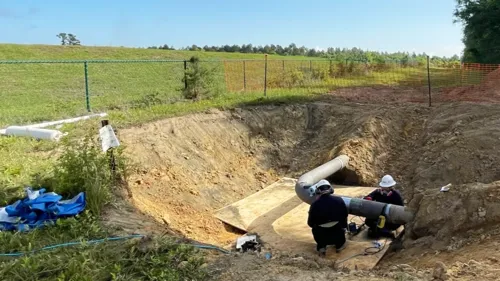
HDD is a trenchless method for installing underground pipes, conduits, cables, or utilities along a pre-determined path to minimize surface disruption.
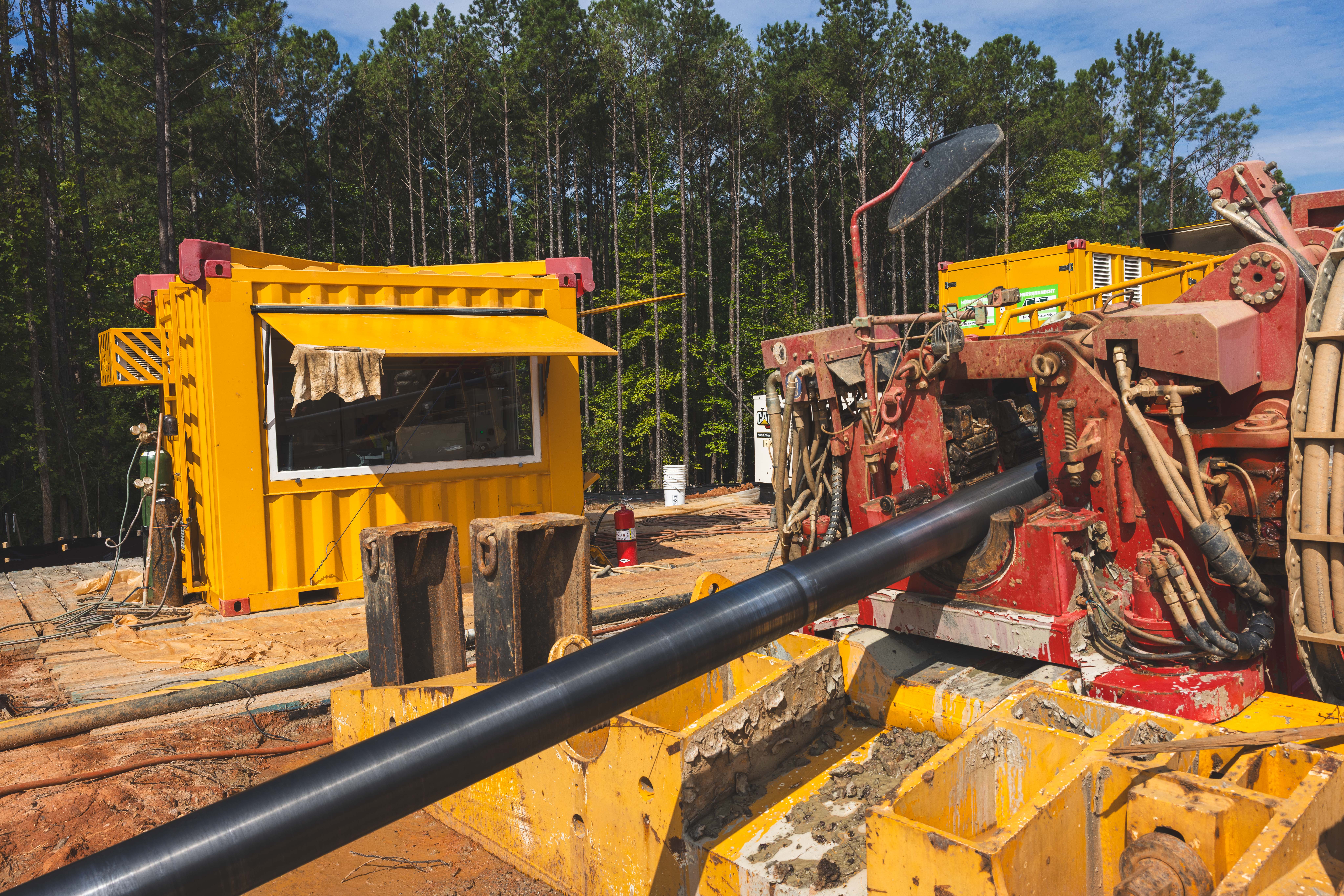
These projects are typically completed in three phases. First, a small pilot hole is drilled along a directional path from one point to another. Next, the bore is enlarged with a reaming pass to a diameter that accommodates the underground utility during installation. Finally, the utility is pulled through the drilled path to create a continuous segment underground.
The primary advantage of HDD lies in its ability to navigate beneath surface constraints without disturbing them. At the same time, HDD shifts risk underground, where subsurface conditions require careful planning throughout design and construction.
Complex Siting Environments: Where Risk Enters the Equation
While every HDD project is unique, most risks can be traced back to two primary drivers: subsurface conditions and bore geometry.
Subsurface conditions are the single most critical factor in HDD feasibility. Soil type, stratification, and behavior under drilling conditions all determine how predictable the installation will be. Geotechnical investigations provide insight into the ability to drill and the overall success of the project. When subsurface conditions are poorly understood, the likelihood of failure increases significantly.
Bore geometry is the second major risk driver. Geometry affects pipe loading, steering capability, and the potential for hydraulic fracture. Even in drillable soils, a drill path that pushes the practical limits of HDD geometry can elevate risk if not carefully analyzed.
Doing HDD Right Starts Long Before Drilling
A successful HDD project begins with feasibility and data collection. Early surveys and geotechnical testing establish what is possible, and just as importantly, what is not. By leveraging soil samples, engineers can understand the full risk profile and how the ground is likely to behave during drilling and installation.
From there, engineering analysis plays a key role in reducing uncertainty. Installation load analysis evaluates whether the selected pipe can safely withstand anticipated tensile stress during pullback. Combined with hydraulic fracture analysis to examine the potential for inadvertent return, these analyses inform design decisions that increase the likelihood of successful installation.
When HDD is done right, the alignment, depth, and geometry increase the likelihood of a smooth and successful installation. This approach helps prevent situations where field crews are forced to make difficult decisions under pressure, with limited ability to course correct.
What “Done Right” Looks Like at Pond
Experience matters in HDD design, especially in complex siting environments. Pond brings dedicated trenchless and HDD expertise developed over more than a decade, informed by projects that range from smaller above ground level (AGL) crossings to highly constrained installations.
That experience translates into practical judgment: knowing what works, what doesn’t, and where caution is warranted. Rather than defaulting to HDD, Pond’s approach focuses on evaluating feasibility early and aligning the solution with the project’s risk profile.
Across project scales, the goal remains the same: balance feasibility, safety, and constructability while reducing uncertainty for clients and contractors.
When to Bring Pond in for HDD Projects
The greatest value in HDD projects comes from early involvement. Identifying challenges upfront helps avoid late-stage redesigns, permitting delays, and problems during construction.
In environments with safety, or stakeholder consequences, early engineering insight can clarify whether HDD is the right solution and how it should be designed to manage risk effectively.
Bringing Pond in early helps determine whether HDD is the right solution and how to design it to reduce risk before construction begins. Learn more about Pond’s services.

 While every HDD project is unique, most risks can be traced back to two primary drivers: subsurface conditions and bore geometry.