By clicking “Accept all”, you agree to storing cookies on your device to enhance site navigation, analyze site usage, and assist in our marketing efforts. More information can be found on "Manage cookies".
When you visit any website, it may store or retrieve information on your browser, mostly in the form of cookies. These “cookies” of information might be about you, your preferences, or your device, and they’re mostly used to make the site work as you expect it to. Cookies don’t usually directly identify you, but they can give you a more personalized web experience. Because we respect your right to privacy, you can choose not to allow some types of cookies. Click on the category headings to read more or change your default settings. (Note: Blocking some types of cookies may impact your experience on our site, as well as the services we can offer you.)
These cookies are necessary for our website to function and can’t be switched off in our systems. They’re set for you behind the scenes when you do things such as log in, fill out forms, make a request for services, or set your privacy preferences. You can set your browser to block or alert you about these cookies, but some parts of our site won’t work without them.
+Functional Cookies
These cookies enable our website to work smoothly and in a manner personalized to you. They may be set by us or by third-party providers whose services we’ve added to our pages. For example; downloading a customer service form using PDF. If these cookies are blocked, then some or all of these services may not function.
+Performance Cookies
These cookies allow us to count how many times people visit our website, and how they get here, so we can measure and improve its performance. They show us which pages are the most (and least) popular, and how visitors move around on the site when they’re here. If you don’t allow performance cookies, we have less information about how to improve our sites that will be useful to you.
+Marketing Cookies
These cookies may be set through our site by our advertising partners. They may be used by those companies to build a profile of your interests and show you relevant advertisements on other sites. If these cookies are blocked, you will experience less targeted advertising.
Designing the Command Centers of the Sky: How Pond Brings Airport Traffic Control Towers to Life
Every takeoff, landing, and taxi maneuver at an airport relies on one vital structure: the Airport Traffic Control Tower (ATCT). These towers are the nerve centers of aviation safety, guiding aircraft through crowded skies and complex airfields with precision and coordination. Without them, the seamless choreography of modern air travel simply wouldn’t exist.
So, what does a site-specific tower design process actually look like? Designing an ATCT goes beyond just constructing a tall building with great views; it’s about engineering visibility, safety, and performance into the heart of airport operations. Each one is purpose-built for its airport and shaped by airfield geometry, technology, expansion, and the people who use it every day.
For decades, Pond has helped shape an array of ATCTs at airports across the nation, from brand-new builds that mark a community’s growth to replacements of aging towers that no longer meet the needs of modern aviation.
We’re kicking off this ATCT series by pulling back the curtain on how these towers come to life and the critical role Pond plays in shaping the future of safe, efficient air travel.
From Concept to Completion: The Lifecycle of an Airport Traffic Control Tower
Every tower project follows a well-defined path from idea to operation, and Pond is uniquely positioned to support airports through each phase. Whether it’s a newfacility or a modernization effort, the process typically unfolds in three key stages: siting, design, and construction.
1. Siting — Finding the Right Location
Before a single line is drawn, the team conducts an in-depth analysis to evaluate a tower’s optimal location in accordance with the FAA’s siting and safety assessment panel guidelines.
While siting is one of the most critical steps in ATCT delivery, it is also one many airport stakeholders rarely see firsthand, as the process is largely driven and reviewed at the federal level. The objective is to support clear, unobstructed visibility of all runways and taxiways while accounting for terrain, airfield geometry, environmental considerations, and future airport expansion.
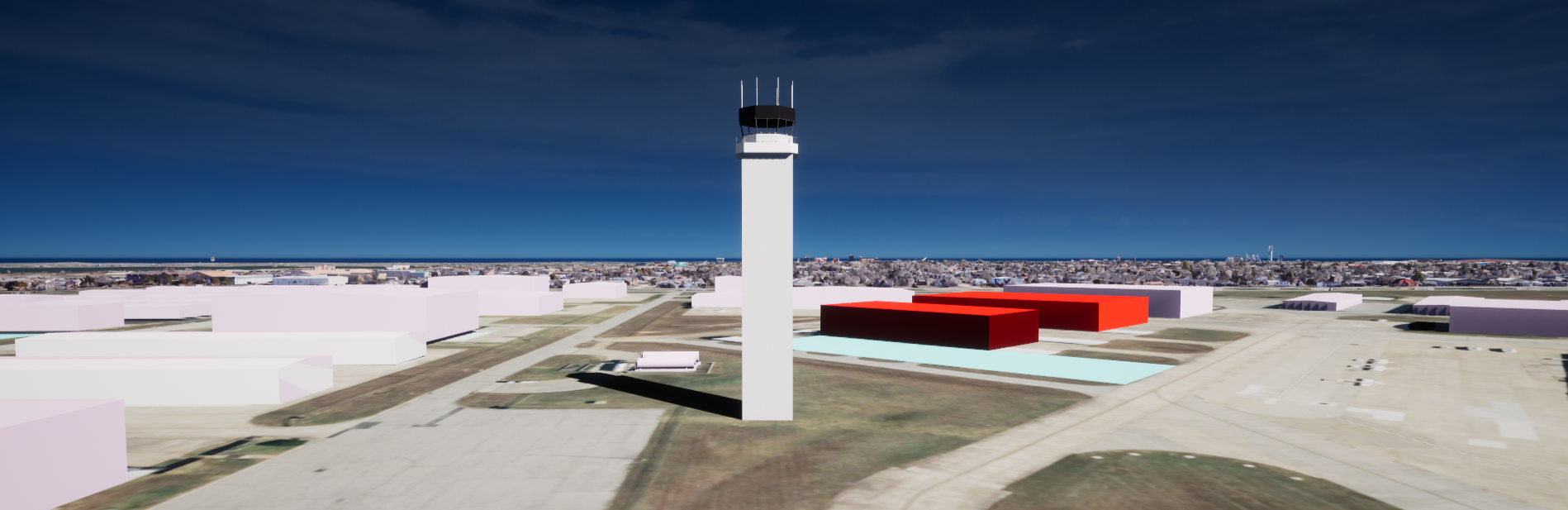
Pond brings a unique perspective to this phase by leveraging UrbanViz, our proprietary, in-house virtual reality tool, offering realistic, computer-generated views to assess visibility and operational factors before advancing into planning and design. Pond is one of a few firms approved by the FAA to provide virtual reality modeling to support ATCT siting studies.
This modeling tool works in conjunction with the FAA’s VISTA process, helping stakeholders visualize and evaluate siting scenarios earlier and more clearly. We’ll take a deeper dive into siting and how these tools support informed decision-making in a future blog dedicated entirely to this topic.
2. Design — Shaping Form and Function
Once the site is approved, Pond’s architecture and engineering teams collaborate to bring the tower to life. Tower height, orientation, and structural systems are all evaluated against wind exposure, hazard mitigation, and long-term maintenance demands, while cab layout and sustainability features are shaped by projected usage, lifecycle costs, and safety requirements. The result is a tower designed to perform reliably under real-world operating conditions.
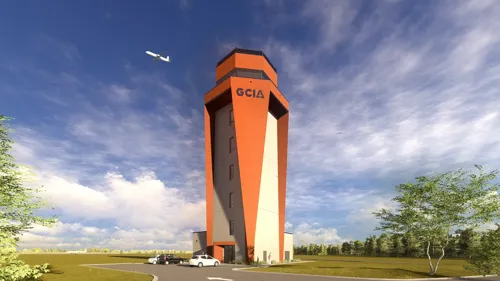
At Wiley Post Airport (PWA) in Bethany, Oklahoma—part of the Oklahoma City metro area— Pond’s design team is developing a new federal contract tower that integrates energy-efficient systems, advanced controller workstations, and improved accessibility for maintenance and training.
This stage blends form and function to create towers that not only meet FAA standards but also reflect the airport’s identity and mission.
3. Construction — Building for the Future
Finally, the project moves into construction, where planning and design are transformed into a tangible landmark. Pond provides construction-phase services and technical oversight to confirm that the tower is built to specification, aligned with safety requirements, and ready for decades of reliable operation.
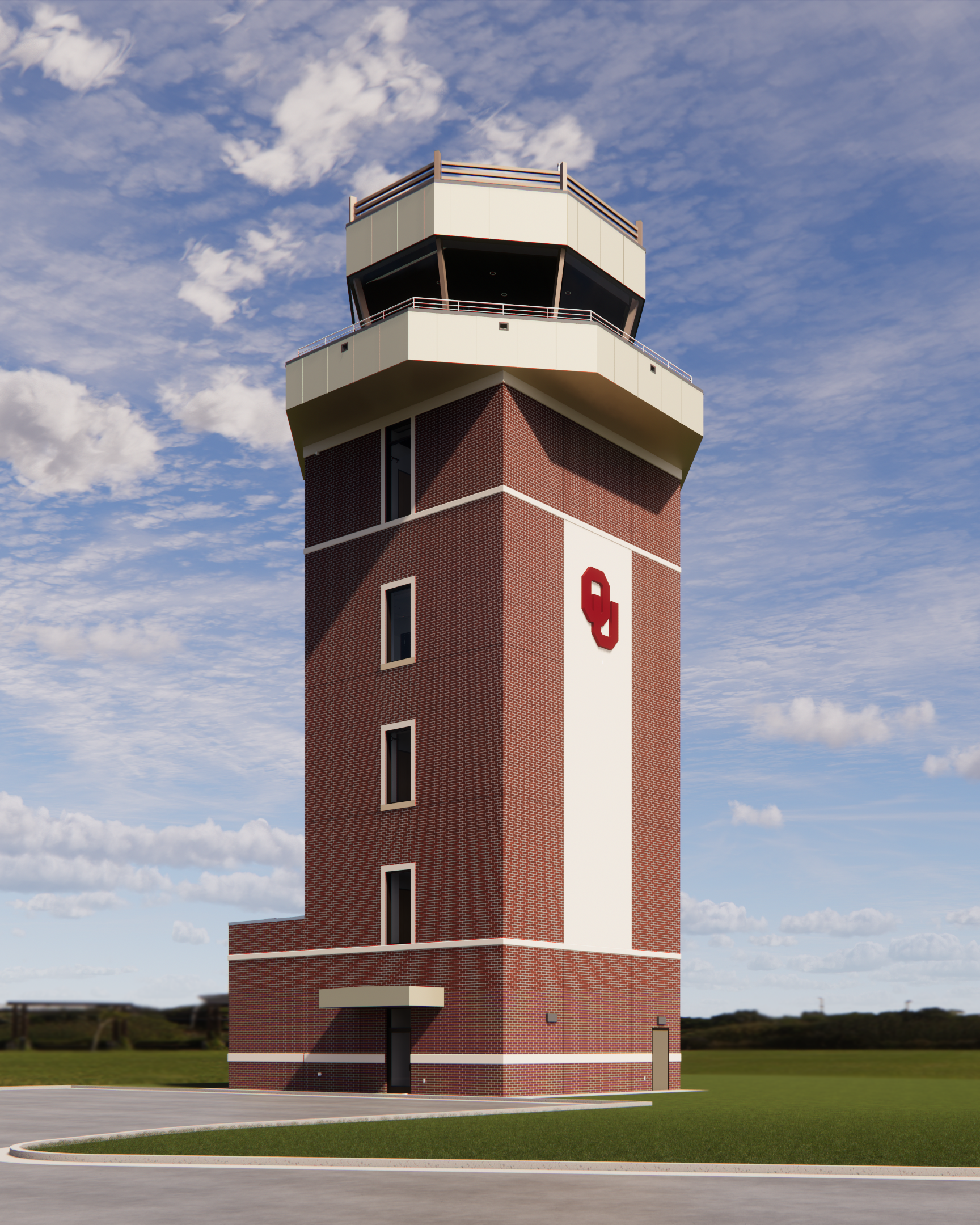
At Max Westheimer Airport (OUN) in Norman, Oklahoma, construction is underway on a next-generation federal tower that will support expanded air operations and introduce modern sustainability features.
Together, these three phases form the lifecycle of an ATCT, from concept to commissioning. At every stage, Pond’s interdisciplinary expertise helps airports achieve safe, efficient, and enduring infrastructure.
Federal Contract Towers Designed to FAA Standards
Pond’s dedicated tower design team supports the development of federally funded ATCTs that are part of the Federal Contract Tower Program (FCTP). These towers are designed and constructed to meet FAA standards but are operated through local or contracted air traffic control services, not staffed by FAA controllers.
This distinction is important. While these towers meet the same rigorous safety and operational standards as FAA-staffed facilities, their local operation allows for greater flexibility, faster implementation, and more tailored service to the airport’s specific needs.
Contract towers often support high-growth regional airports and emerging aviation hubs, but may not meet the criteria for a fully FAA-operated facility. By filling this gap, contract towers provide safe, flexible air traffic control for growing airports and the communities who rely on them.
Modernizing and Replacing Aging Towers
Not every tower project begins from scratch. Most airports already have control towers, but over time, those structures can become outdated, undersized, or poorly positioned for the airport’s evolving layout. New runways, expanded taxiway systems, or increased flight operations can all drive the need for a replacement or relocation.
In these cases, airports often turn to Pond to lead the initial approval and siting process. The objective is a modernized tower that supports operational growth, integrates emerging technology, and is designed to support long-term maintainability.
Building a Legacy of Safe, Efficient Airfields
Across the U.S., Pond has partnered with airports and federal agencies to deliver towers that improve safety and strengthen communities. From regional airports adding their first federally funded tower to large commercial hubs upgrading decades-old infrastructure, each project illustrates our commitment to quality, collaboration, and safety-focused design.
For many airport managers, an ATCT project is a once-in-a-career undertaking. For Pond, it’s the work we do every day: bringing repeatable experience, informed decision-making, and steady guidance to each unique site.
Every tower we design represents more than a structure. It’s a commitment to the future of aviation, built to serve controllers, pilots, and passengers alike. Pond’s depth of experience across planning, design, and construction management allows us to translate that commitment into towers that meet today’s needs while anticipating tomorrow’s challenges. Find more of Pond’s aviation projects and services.

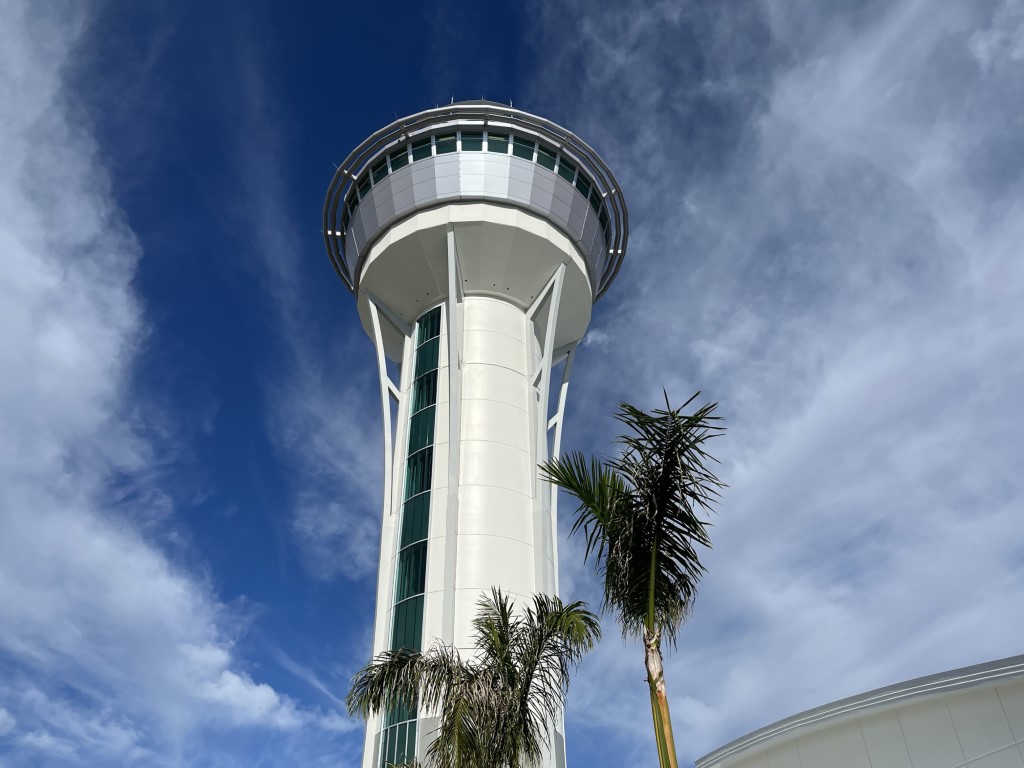 Every takeoff, landing, and taxi maneuver at an airport relies on one vital structure: the Airport Traffic Control Tower (ATCT). These towers are the nerve centers of aviation safety, guiding aircraft through crowded skies and complex airfields with precision and coordination. Without them, the seamless choreography of modern air travel simply wouldn’t exist.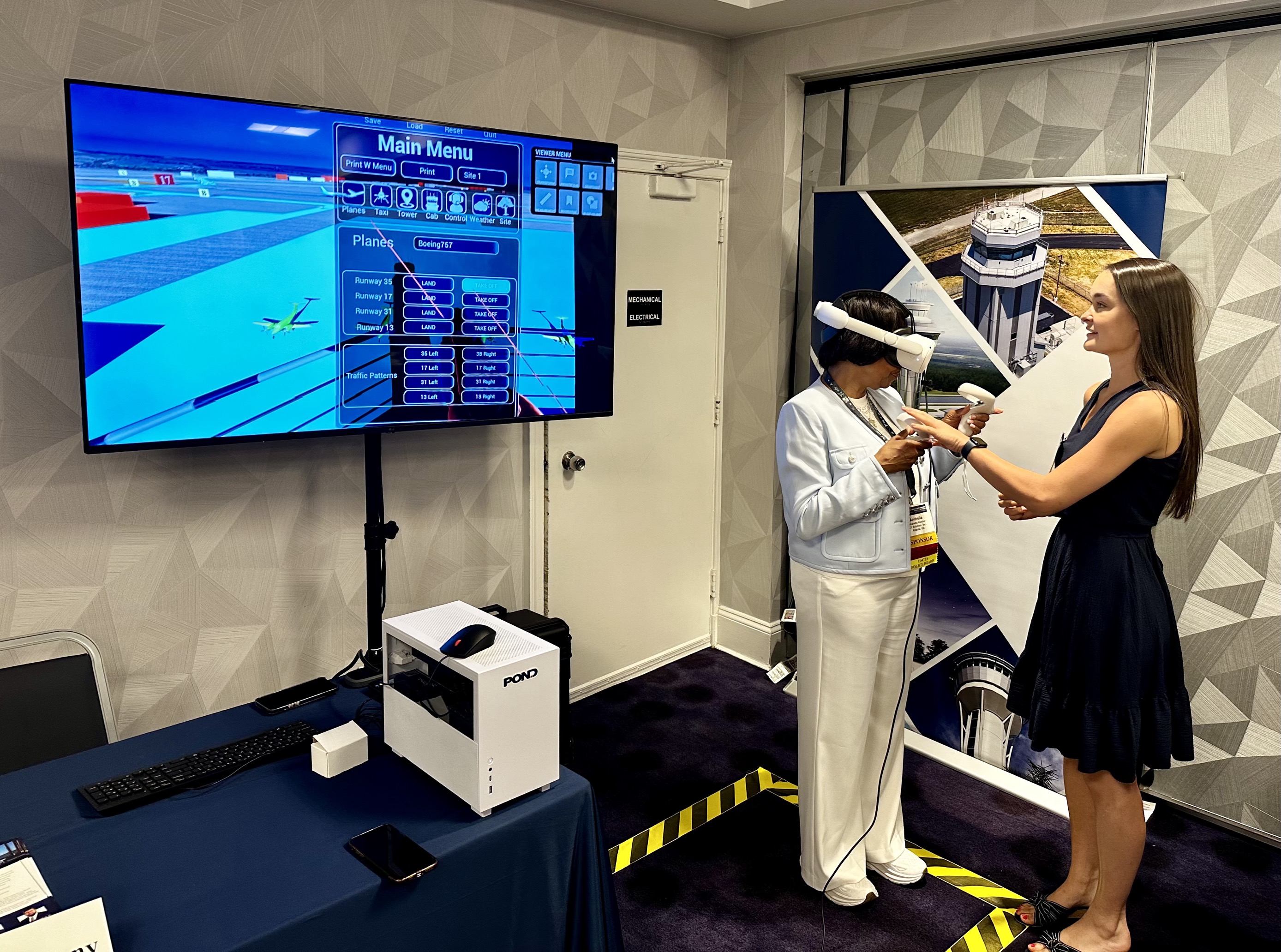
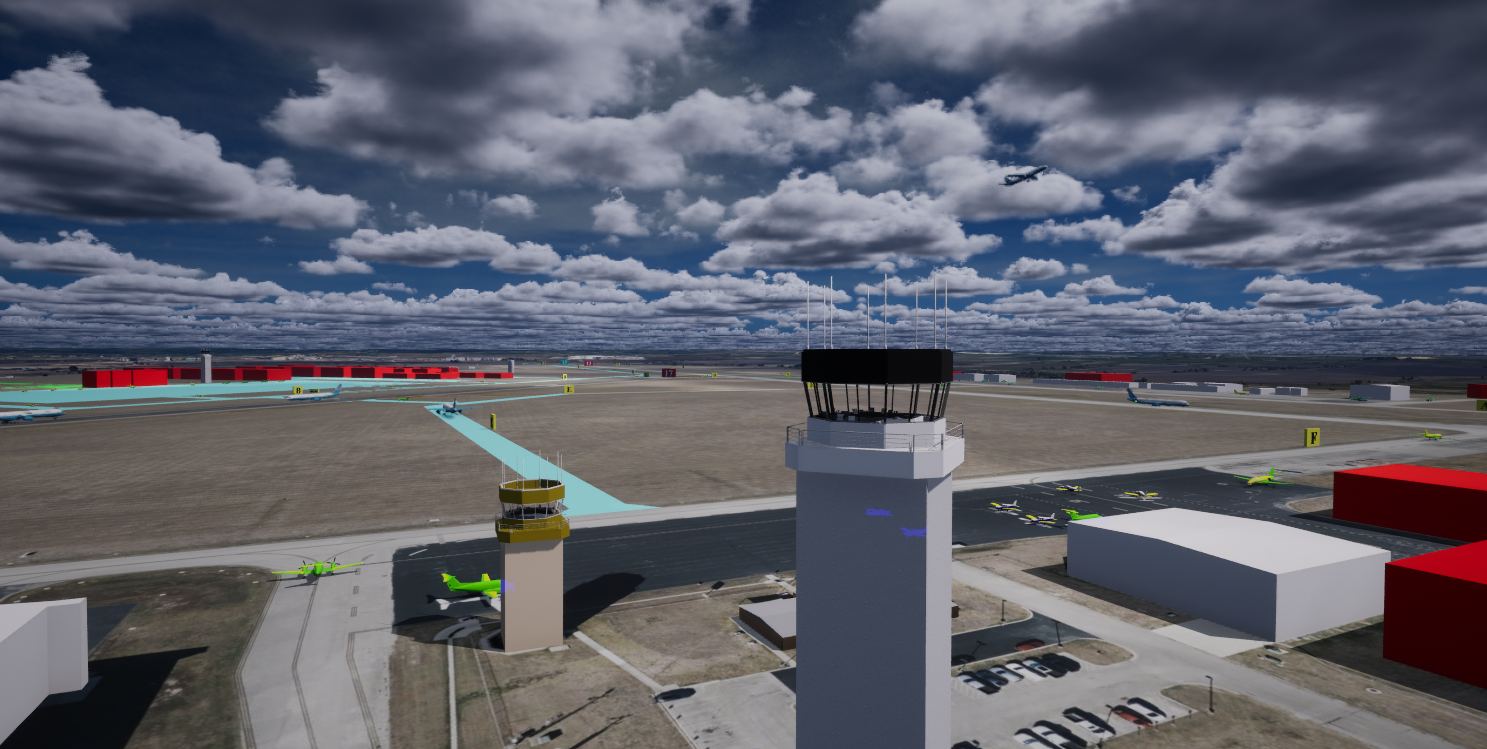
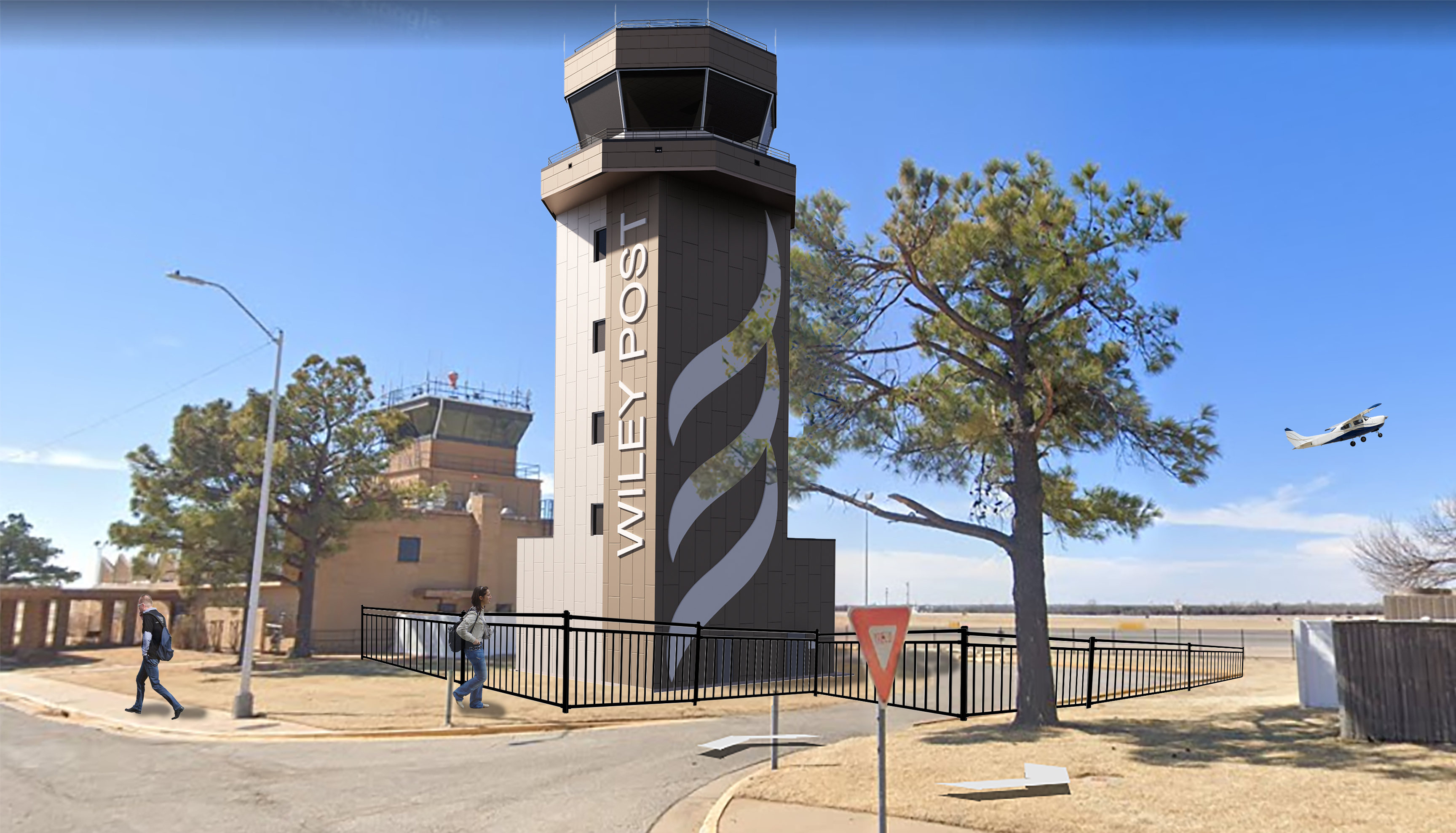 Once the site is approved, Pond’s architecture and engineering teams collaborate to bring the tower to life. Tower height, orientation, and structural systems are all evaluated against wind exposure, hazard mitigation, and long-term maintenance demands, while cab layout and sustainability features are shaped by projected usage, lifecycle costs, and safety requirements. The result is a tower designed to perform reliably under real-world operating conditions.