By clicking “Accept all”, you agree to storing cookies on your device to enhance site navigation, analyze site usage, and assist in our marketing efforts. More information can be found on "Manage cookies".
When you visit any website, it may store or retrieve information on your browser, mostly in the form of cookies. These “cookies” of information might be about you, your preferences, or your device, and they’re mostly used to make the site work as you expect it to. Cookies don’t usually directly identify you, but they can give you a more personalized web experience. Because we respect your right to privacy, you can choose not to allow some types of cookies. Click on the category headings to read more or change your default settings. (Note: Blocking some types of cookies may impact your experience on our site, as well as the services we can offer you.)
These cookies are necessary for our website to function and can’t be switched off in our systems. They’re set for you behind the scenes when you do things such as log in, fill out forms, make a request for services, or set your privacy preferences. You can set your browser to block or alert you about these cookies, but some parts of our site won’t work without them.
+Functional Cookies
These cookies enable our website to work smoothly and in a manner personalized to you. They may be set by us or by third-party providers whose services we’ve added to our pages. For example; downloading a customer service form using PDF. If these cookies are blocked, then some or all of these services may not function.
+Performance Cookies
These cookies allow us to count how many times people visit our website, and how they get here, so we can measure and improve its performance. They show us which pages are the most (and least) popular, and how visitors move around on the site when they’re here. If you don’t allow performance cookies, we have less information about how to improve our sites that will be useful to you.
+Marketing Cookies
These cookies may be set through our site by our advertising partners. They may be used by those companies to build a profile of your interests and show you relevant advertisements on other sites. If these cookies are blocked, you will experience less targeted advertising.
PACAF FSRM: Designing Spaces That Support Mission and Family
The Pacific Air Forces (PACAF) plays a critical role in sustaining U.S. operations across the Indo-Pacific region. That mission is strengthened through Air Force Installation and Mission Support Center (AFIMSC) Detachment 2’s PACAF Facility Sustainment, Restoration & Modernization (FSRM) Execution Initiative, under which Pond is delivering resilient, high-performance design solutions that deliver both mission effectiveness and quality of life for Airmen.
Operating in the Indo-Pacific is uniquely challenging. Every project must balance U.S. Department of Defense (DoD) and UFC standards with Host Nation and local government codes, while also being fully constructible using local materials, labor practices, and construction methods. Pond’s ability to reconcile these diverse requirements leads to design packages that are not only compliant, but practically executable in the field — a critical factor for execution agents and installation partners working across Japan, Korea, Guam, and the broader Pacific.
Across the PACAF FSRM Execution Initiative, Pond’s designs help installations modernize aging infrastructure, reinforce resilience against the region’s demanding climates, and enhance the everyday experience of Airmen and their families.
Restoring Unaccompanied Housing in Guam
At Andersen Air Force Base, Pond is leading major dormitory modernization efforts to deliver safe, efficient, and resilient unaccompanied housing for Airmen. These facility-wide renovations demand careful coordination between UFC criteria, Guam territorial codes, environmental constraints, and local construction realities.
The Palau, Rota, and Saipan dormitory projects, each approximately 55,675 square feet, include comprehensive upgrades such as:
Modernized fire alarm and mass-notification systems
Complete electrical and plumbing system replacement
Structural and building envelope repairs
AT/FP-compliant window and door systems
Re-grading and drainage redesign to address persistent ponding and stormwater issues
Mold mitigation and moisture control strategies informed by Typhoon Mawar (2023) impacts
A 40-year life cycle cost analysis (LCCA) informed system selections to deliver long-term maintainability and reduced environmental vulnerability. Material specifications emphasize locally available and corrosion-resistant components, minimizing logistics delays common to Guam’s remote supply chain.
These improvements reinforce readiness by providing Airmen access to safe, comfortable, dependable unaccompanied housing, an essential factor in morale, retention, and mission performance.
Building Community Resilience in Korea
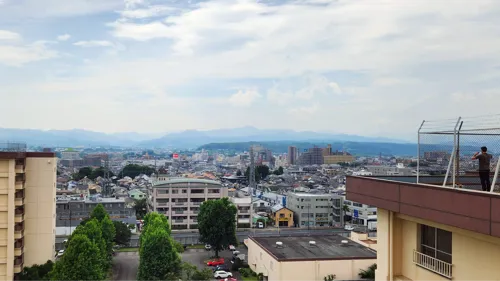
At Gwangju Air Base in the Republic of Korea, Pond is helping PACAF rebuild and modernize essential community and mission facilities.
One key effort is the 5,930-square-foot multi-purpose community facility designed to replace a structure destroyed by fire. To successfully balance utilize Korean labor and materials while still meeting U.S. Air Force requirements, Pond integrated:
U.S. UFC standards for life safety, fire protection, and antiterrorism
Korean Building Code for structural design and seismic performance
Local construction practices, including preferred reinforced concrete systems and regionally available materials
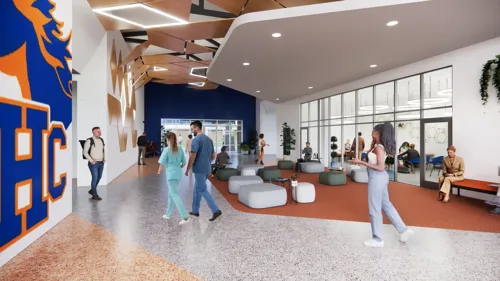
The resulting design provides flexible community space — including recreation areas, kitchen facilities, restrooms, storage, and a covered outdoor patio — while also supporting contingency operations through redundant power and communications.
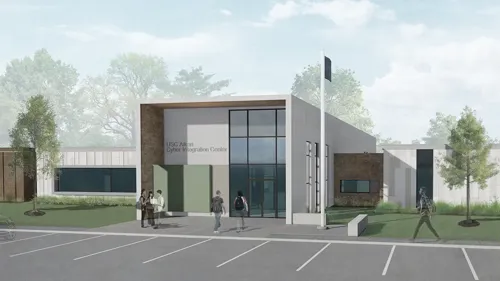
Nearby, Pond developed the concept design for a 4,000-square-foot ICD-705-compliant secure operations facility for Air Force Office of Special Investigations Detachment 262. The building includes:
Hardened evidence vaults
Secure interview rooms
Controlled communications routing
Cyber- and physical-security features tailored to Host Nation constructability
These facilities strengthen both mission support and community cohesion while balancing designs that are executable under Korean procurement and construction methods.
Engineering for Endurance in Japan
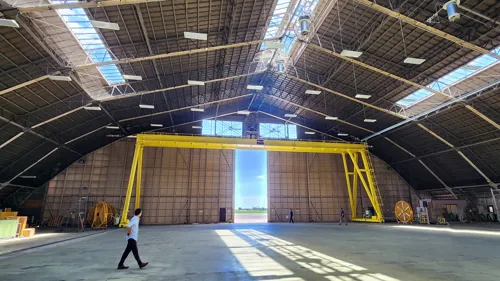
At Kadena Air Base in Okinawa, Pond is addressing complex environmental and structural challenges that impact facility performance across the installation. Extreme humidity, airborne chlorides, heavy rainfall, and marine C-5 corrosion create accelerated wear on building systems and infrastructure.
Pond’s design approach at Kadena integrates:
UFC-compliant repair and modernization requirements
Japanese Building Code (JBC) for seismic design, structural loads, and life-safety systems
Local construction techniques, including Japanese concrete standards and regionally available mechanical/electrical components
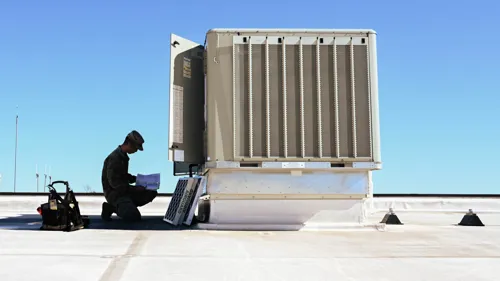
Material selections proven to withstand Okinawa’s corrosive coastal environment
Drainage and stormwater improvements based on local rainfall intensity data
Phasing strategies that allow mission-critical operations to continue uninterrupted
Across administrative, operational, and industrial facilities, these upgrades are not only technically sound but buildable by Japanese contractors using standard local methods, minimizing long-lead imports and accelerating execution.
These efforts extend facility service life, improve energy performance, and enhance mission resilience across PACAF’s largest overseas installation.
Conclusion: Local Expertise, Global Readiness
Under the PACAF FSRM Execution Initiative, delivering infrastructure is as much about navigating regulation, climate, and constructability as it is about design. Pond balances DoD UFC standards with Host Nation codes and local construction practices to deliver solutions that are compliant, durable, regionally adapted, and truly buildable.