By clicking “Accept all”, you agree to storing cookies on your device to enhance site navigation, analyze site usage, and assist in our marketing efforts. More information can be found on "Manage cookies".
When you visit any website, it may store or retrieve information on your browser, mostly in the form of cookies. These “cookies” of information might be about you, your preferences, or your device, and they’re mostly used to make the site work as you expect it to. Cookies don’t usually directly identify you, but they can give you a more personalized web experience. Because we respect your right to privacy, you can choose not to allow some types of cookies. Click on the category headings to read more or change your default settings. (Note: Blocking some types of cookies may impact your experience on our site, as well as the services we can offer you.)
These cookies are necessary for our website to function and can’t be switched off in our systems. They’re set for you behind the scenes when you do things such as log in, fill out forms, make a request for services, or set your privacy preferences. You can set your browser to block or alert you about these cookies, but some parts of our site won’t work without them.
+Functional Cookies
These cookies enable our website to work smoothly and in a manner personalized to you. They may be set by us or by third-party providers whose services we’ve added to our pages. For example; downloading a customer service form using PDF. If these cookies are blocked, then some or all of these services may not function.
+Performance Cookies
These cookies allow us to count how many times people visit our website, and how they get here, so we can measure and improve its performance. They show us which pages are the most (and least) popular, and how visitors move around on the site when they’re here. If you don’t allow performance cookies, we have less information about how to improve our sites that will be useful to you.
+Marketing Cookies
These cookies may be set through our site by our advertising partners. They may be used by those companies to build a profile of your interests and show you relevant advertisements on other sites. If these cookies are blocked, you will experience less targeted advertising.
What Adding LNG Capacity Means for Facility Design
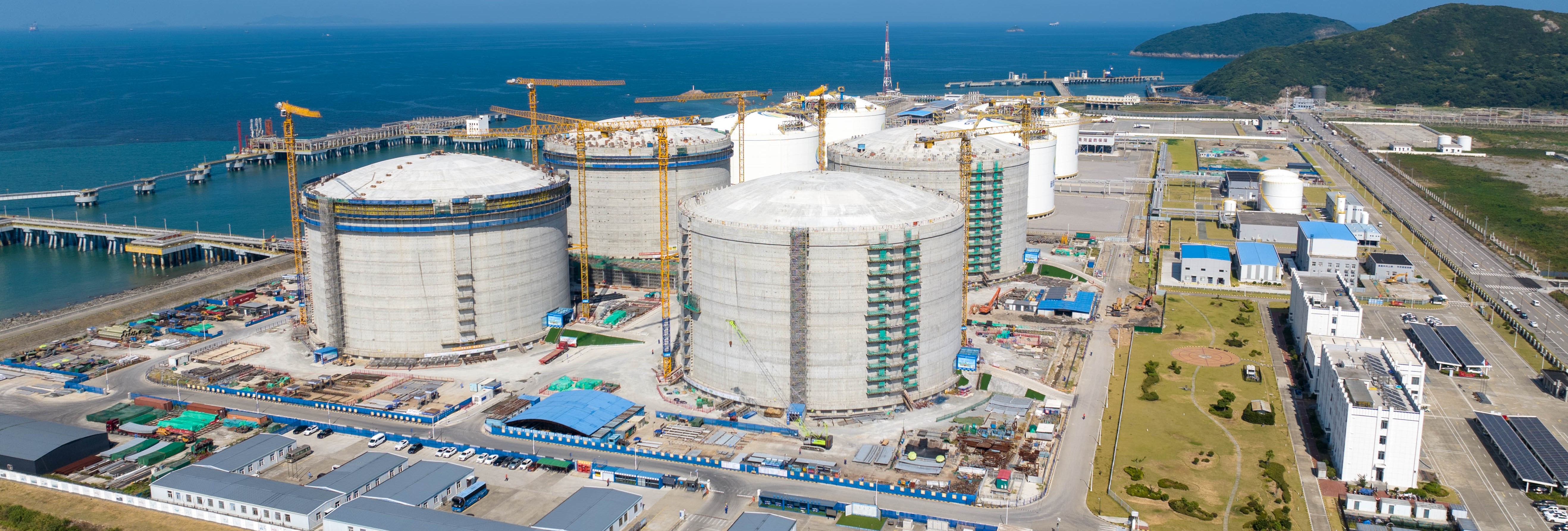
Natural gas was once treated as an inconvenient byproduct of oil production. At the time, it was difficult to store and had little commercial value. That changed with the development of liquefaction, cryogenic storage, and the ability to move liquefied natural gas (LNG) farther and store it more efficiently. Its limited use as a local backup fuel transformed into a flexible energy commodity that could support utilities, industries, and international trade. Today, the U.S. is the world’s largest exporter of LNG, and it continues to be an important resource in both domestic energy reliability and global supply.
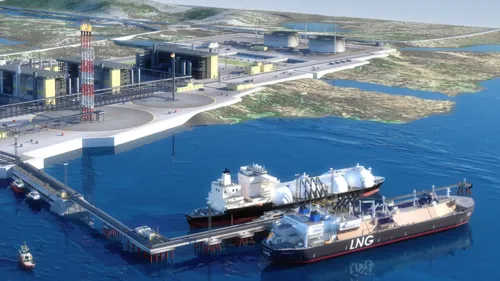
The U.S. is expected to more than double its current liquefaction capacity by 2029. That's a historic growth cycle, and for owners moving forward with new or expanded LNG facilities, the hard part isn't the engineering — it's everything that has to go right around it. Peak shaving plants, import conversions, export terminals, satellite storage, and truck-loading facilities do not share the same siting logic, operations, or regulatory requirements.
As the U.S. seeks to expand capacity through the end of the decade, the challenge facing owners will be how to navigate the interconnected permitting, infrastructure, and operational requirements needed to bring these facilities online. Effectively addressing these challenges takes experience recognizing where conflicts will arise and how to resolve them quickly. Pond brings that perspective to LNG projects by combining regulatory understanding and facility design expertise to help clients develop practical solutions that reflect the specific demands of their facility and long-term goals.
What Successful LNG Projects Have in Common
The LNG projects that move forward successfully tend to share several characteristics. First, their owners engage an engineering team with experience evaluating liquefaction trains, storage and send out requirements, pre-treatment needs, utility loading, hazardous area classification, and construction sequencing as part of a single design basis. That early coordination is especially important when the project depends on modular construction, repeatable design, or phased capacity additions. These projects will have designs and execution plans that are phased to align with the defined project constraints.
Successful projects also keep technical decisions tied to the facility’s intended purpose. LNG facilities may share common systems, but they do not share the same operating profile, reliability requirements, or long-term growth plan. The right engineering team helps owners define those priorities early and translate them into project-specific decisions around train configuration, tank layout, boil-off gas handling, and controls. That positions the facility for long-term success by supporting reliable operation and future expansion without creating avoidable conflicts later in development.
When LNG Projects Break Down
LNG projects demand a highly technical engineering skillset to manage the technical and operational challenges that develop over a multiyear project lifecycle. Yet for many facilities, the greater challenge is not whether the systems can be designed, but whether the project can successfully navigate the regulatory path required to move forward.
When regulatory requirements and permitting triggers are not understood from the beginning, LNG projects can begin to break down before teams recognize the risk. Each installation can involve a different mix of safety standards, environmental review, agency oversight, and siting expectations. When those differences are not understood, projects can advance on assumptions that later conflict with permitting requirements and require significant revision.
Projects also lose momentum when existing conditions are underestimated. For brownfield developments, the limited footprint, legacy infrastructure, constrained access, and active operations all shape what can realistically be built. This is especially true for upgrades to older facilities, where owners may be balancing aging equipment, outdated codes, and the need to maintain service during construction. In those environments, even targeted improvements can introduce unintended compliance obligations or jeopardize grandfathered conditions if retrofit scope is not carefully planned.
Technical decisions can cause problems when they are made without considering how the facility will actually be operated and upgraded over time. If those factors are not addressed early, owners can end up with redesigns, added costs, or systems that are harder to operate and expand.
A Better Approach: Integrated Regulatory and Technical Strategy from Day One
Because LNG projects are complex, they need to be approached strategically from the start. During FEED, owners need to understand how permitting expectations may affect layout, access, impoundment, safety systems, utility routing, and other core design decisions. From a regulatory standpoint, this includes the regulations set by PHMSA and FERC.
That same early alignment is critical for projects on existing sites. Many LNG projects involve expanding or retrofitting an active site. In those settings, engineering decisions need to account for tie-ins, legacy infrastructure, phased construction, shutdown windows, and ongoing operations at the same time they address process and safety requirements. Without that level of coordination, projects that appear technically sound in early development can still run into conflicts once execution planning begins.
The projects that stay on track will be able to resolve those issues early. That requires an engineering team that can integrate regulatory requirements, facility design, and construction planning, before they splinter into separate problems later. For owners and operators, that creates a stronger basis for phasing, procurement, capital planning, and long-term operations.
Conclusion: Choosing the Right LNG Design Partner
Demand for LNG continues to grow, and as its role expands, the hard part of LNG facility design will continue to center around execution. The right LNG design partner is one that understands regulatory frameworks as deeply as engineering design. That partner should be comfortable with brownfield environments, capable of guiding technology selection around real-world conditions, and able to support the project from FEED through detailed design, IFC drawings, and as-built documentation.
Pond brings that integrated perspective to every project, connecting regulatory strategy with engineering design rather than treating them as separate workstreams. For clients, that means fewer surprises in permitting, fewer redesigns during execution, and a clearer path from FEED to IFC.
Projects with the most success are designed with execution in mind from the beginning. Learn more about Pond’s approach to complex infrastructure projects at pondco.com.